Skydivers Have 2 Parachutes
Tuesday, October 16, 2018
- Skydive Orange
- 10/16/18
- 0
- Skydiving Information
TL;DR
Skydiving containers hold a main and reserve parachute. If the main cannot be safely used, the skydiver follows practiced emergency procedures and deploys the reserve. Reserves must be inspected and packed by an appropriately rated FAA-certificated parachute rigger every 180 days. Tandem and student systems also include an Automatic Activation Device that can initiate reserve deployment under certain altitude and descent-speed conditions. Tandem instructors train extensively for parachute malfunctions and other emergencies.
Do skydivers have two parachutes? Yes. Modern-day skydiving containers include two parachutes: a main parachute and a reserve parachute.
The main parachute is used on every routine skydive. The reserve is a completely separate backup parachute designed for use when the main parachute cannot be safely landed or is not deployed at all.
Parachute malfunctions are possible, which is why skydiving equipment and training are built around redundancy. Skydivers do not simply jump with one parachute and hope everything goes according to plan. They jump with a second parachute, additional backup devices and thoroughly practiced emergency procedures.
Let’s take a closer look at these protective measures and answer another common question: What do skydivers do if their parachute fails?
The Main and Reserve Parachutes
Do skydivers reuse parachutes? Yes. Parachutes are designed to be packed and used repeatedly. They can remain in service as long as they are properly maintained, pass the required inspections, and have not deteriorated from age, damage or wear and tear. Although the main and reserve parachutes are contained in the same rig, they serve different purposes.
The Main Parachute
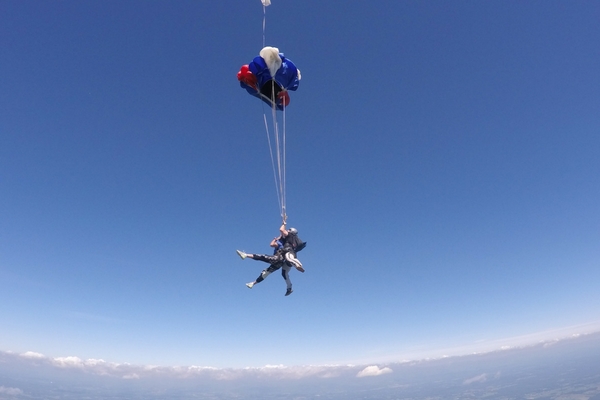
The main parachute is the primary canopy used during a normal skydive. It is stored in the lower portion of the container and is deployed manually by the skydiver or tandem instructor.
After deployment, the skydiver checks that the canopy has opened properly, is controllable, and can be landed safely. If it passes those checks, the skydive continues under the main parachute. If it does not, the skydiver follows the appropriate emergency procedures. Depending on the type of malfunction, that may involve releasing, or “cutting away”, the main parachute before deploying the reserve.
The Reserve Parachute
Do parachutes have a backup? Yes, the reserve parachute is stored separately in the upper portion of the container. It is used when the main parachute has malfunctioned, cannot be safely landed, or was not deployed.
A reserve deployment is not always the result of a completely unopened parachute. A main canopy may be inflated but spinning, damaged, tangled, or otherwise unsafe or undesirable to land. Skydivers are trained to evaluate the canopy, remain aware of their altitude, and make a timely decision.
According to the United States Parachute Association’s 2025 Member Survey, USPA members made an estimated 3.47 million skydives during the year. The survey estimated 4,777 reserve rides, or approximately one reserve use for every 726 jumps.
That does not mean every one of those jumps involved an equipment failure. In many cases, it means a skydiver recognized that the main parachute was not performing as desired and chose to land the reserve instead.
Who Packs the Parachutes?
Main and reserve parachutes are subject to different packing requirements.
Under federal regulations, a main parachute may be packed by the person who intends to use it on the next jump, an FAA-certificated parachute rigger, or someone working under the direct supervision of a certificated rigger. Tandem main parachutes have similar requirements and may also be packed by the tandem instructor making the next jump.
Reserve parachutes are more tightly regulated. They must be inspected and packed by an appropriately rated FAA-certificated parachute rigger. The reserve must be inspected and repacked at least once every 180 days, even if it has not been used. These requirements are established by Federal Aviation Regulation 105.43.
Reserve canopies are designed and packed for reliable emergency deployment. The goal is not excitement or performance. The goal is a prompt deployment followed by a stable, controllable flight to the ground, and in an emergency, boring is exactly what we want.
What Happens If the Instructor Cannot Deploy the Parachute?
People considering a tandem skydive sometimes ask, “What if my instructor becomes unconscious?” or “What do skydivers do if their parachute fails?” Tandem skydiving systems are equipped with an Automatic Activation Device, commonly called an AAD. Most experienced sport skydivers also choose to jump with one.
An AAD is a small electronic device installed inside the parachute container. It monitors altitude and rate of descent throughout the skydive. If the system detects that the skydiver is still descending above a predetermined speed near its activation altitude, it can initiate deployment of the reserve parachute.
An AAD is an important backup device, but it is not intended to take the place of the instructor’s actions. The tandem instructor is still responsible for deploying the main parachute and completing the appropriate emergency procedures. The AAD is there as another layer of protection if the instructor is unable to act.
Tandem Instructors Train for Parachute Emergencies
Technology is only part of the system. The person operating the equipment must know how to recognize a problem and respond correctly.
Tandem instructors are highly experienced skydivers. Federal regulations require a tandem instructor to have at least three years of experience, a minimum of 500 jumps, complete a tandem certification course, and hold a certification for the specific tandem system being used. USPA-rated tandem instructors must also meet current medical requirements.
Their training covers equipment operation, student management, aircraft emergencies, parachute malfunctions, and landing procedures. Tandem instructors must also maintain their rating and regularly review and practice emergency procedures.
What If You Are Learning to Skydive?
Students learning to skydive independently also use equipment containing a main parachute, a reserve parachute, and an AAD.
Before making a first student jump, you will receive ground training on how the parachute system works, how to determine whether a canopy is safe to land, and how to respond to different types of malfunctions. You will practice those procedures on the ground before ever boarding the aircraft.
That training continues throughout the student program. Repetition matters because emergency procedures need to become familiar enough to perform correctly even in a stressful situation.
Ready to See How It All Works?
Skydiving will always involve risk, and no piece of equipment can make it risk-free. What modern skydiving does provide is a system of overlapping safeguards: two parachutes, regulated packing and maintenance, backup deployment devices, and trained skydivers who practice what to do when something does not go as planned.
Now that you know why skydivers have two parachutes, and what the additional backup systems do, come see the equipment for yourself. Our team is happy to answer your questions, explain the gear, and introduce you to the sport.
When you’re ready, book your skydive at Skydive Orange and experience it for yourself.

Dave Harris – South Riding, VA
South Riding, VA
The instructors and coaches were incredibly competent, professional and fun to be around.
The largest tandem skydiving center near Northern Virginia, Washington D.C. and Maryland.
Copyright © 2026, Skydive Orange, All Rights Reserved.
DropZone Web Design & Marketing by Beyond Marketing, LLC